Enugu, Abia Record Fastest Revenue Growth Across Nigeria in Post-Subsidy Era — BudgIT
By Uka_Chimaobi_Uduma
September 12, 2026 • 3 mins read

Enugu, Abia Record Fastest Revenue Growth Across Nigeria in Post-Subsidy Era — BudgIT
Enugu State recorded the highest aggregate revenue growth among Nigerian states during the post-subsidy period, with its actual revenue rising from N102.68 billion in 2022 to N665.85 billion in 2025.
The increase represents a nominal compound annual growth rate (CAGR) of 86.48 per cent, according to a BudgIT report titled, “Nigeria’s Reforms: What Has Changed Across Nigeria’s States? An Analysis of State Finances in the Post-Subsidy Years.”
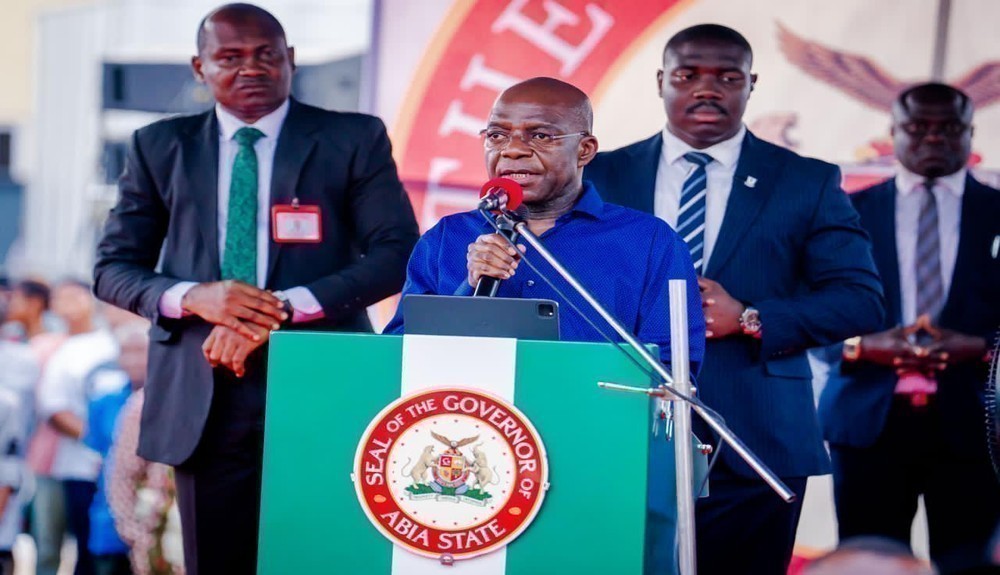
Abia State ranked second with a revenue CAGR of 66.05 per cent, followed by Niger, Taraba and Bauchi, which recorded growth rates of 60.47 per cent, 54.33 per cent and 53.87 per cent, respectively.
The figures indicate that the increase in resources available to state governments following the removal of the petrol subsidy and subsequent fiscal changes was not limited to Nigeria’s largest economies.
According to the report, aggregate state revenue grew at a CAGR of 47.57 per cent during the period under review.
Edo recorded a 53.28 per cent CAGR, followed by Imo at 52.89 per cent, Katsina at 52.33 per cent, Anambra at 52.20 per cent and Osun at 52.07 per cent.
Kogi, Plateau, Oyo, Cross River, Ekiti and Gombe also recorded revenue growth rates of about 50 per cent or higher.
BudgIT attributed a significant portion of the increase to higher disbursements from the Federation Account Allocation Committee (FAAC), while noting that improved internally generated revenue mobilisation also contributed to the growth recorded in some states.
Lagos Still Leads in Actual Revenue
Despite recording a slower proportional growth rate, Lagos remained the state with the highest actual revenue during the period.
Its revenue increased from N889.45 billion in 2022 to N2.63 trillion in 2025.
However, its 43.49 per cent CAGR placed it 22nd among the states covered by the report, highlighting the difference between the size of a state’s revenue base and its rate of growth.
Delta State also recorded substantial growth in actual revenue, rising from N540.84 billion in 2022 to N1.45 trillion in 2025.
Its 38.90 per cent CAGR, however, remained below the overall growth rate recorded across the states included in the analysis.
The report noted that states with smaller revenue bases were, in several cases, expanding their fiscal capacity at a faster proportional rate than states with traditionally larger economies.
At the bottom of the revenue-growth ranking was Nasarawa, with a CAGR of 27.94 per cent.
Kebbi followed with 32.59 per cent, Zamfara with 32.69 per cent, Ogun with 32.71 per cent and Kaduna with 33.55 per cent.
Akwa Ibom, Rivers Excluded
The analysis covered 34 states, as Akwa Ibom and Rivers were excluded due to the absence of complete budget implementation reports.
BudgIT said it relied on actual first to fourth quarter budget implementation data to compare fiscal performance and spending trends between 2022 and 2025.
The exclusion meant that the two oil-producing states, despite their significant revenue profiles, could not be assessed alongside the other states using comparable implementation data.
The report also noted that the omission highlights the importance of regular publication of complete budget implementation reports in assessing how state governments manage public resources.
Revenue Gains Do Not Automatically Translate to Development
BudgIT cautioned that the increase in state revenues should not be assessed solely by the amount of funds received, but also by how governments deploy those resources.
The analysis examined aggregate revenue and expenditure growth, personnel costs, overhead expenditure and capital spending, as well as expenditure on critical sectors such as education, healthcare, infrastructure and administration.
It said differences in revenue performance across states reflected variations in economic structures, revenue administration capacity and the ability of individual governments to mobilise internally generated revenue.
Although statutory allocations accounted for a larger share of the overall increase in state revenues, the report stressed that strengthening domestic revenue mobilisation remains important for long-term fiscal sustainability and reducing dependence on federal transfers.
BudgIT also cautioned that increased public revenue must be accompanied by transparency and accountability if citizens are to benefit from the fiscal gains generated by the reforms.
“Transparency, accountability, and citizen participation remain essential to ensuring that increased revenues produce tangible benefits for citizens,” the organisation said.
It identified timely publication of budget implementation reports, open procurement processes and stronger public oversight as key measures for ensuring that increased government resources translate into improved public services.