2027: Atiku, Tinubu clash over fuel subsidy, $16bn power projects
By Uka_Chimaobi_Uduma
August 27, 2026 • 5 mins read
2027: Atiku, Tinubu clash over fuel subsidy, $16bn power projects
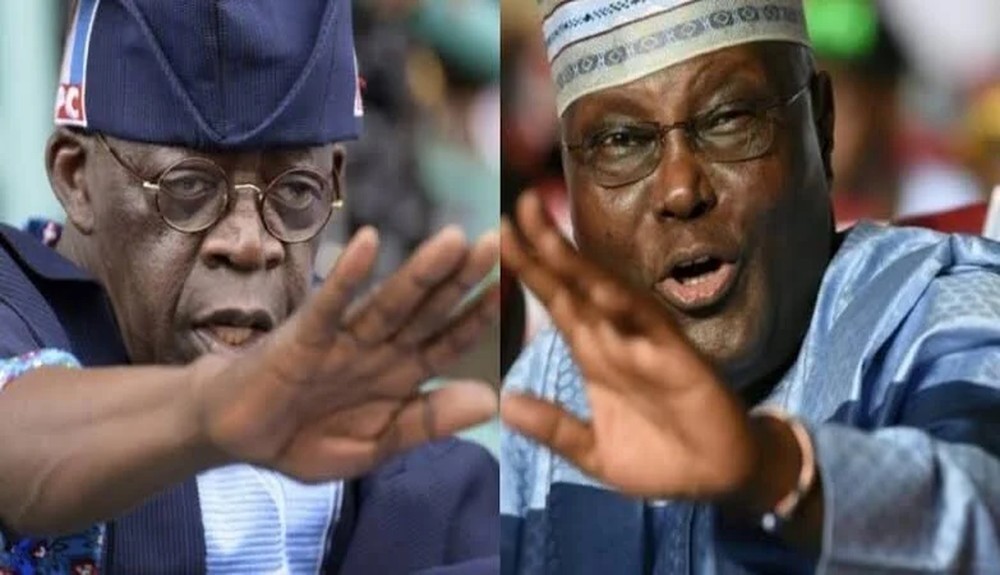
The political battle ahead of the 2027 presidential election has intensified, with former Vice President Atiku Abubakar and the Presidency trading accusations over fuel subsidy, economic hardship and alleged mismanagement of public funds.
Atiku, the presidential candidate of the African Democratic Congress, challenged the Federal Government to investigate and prosecute him if it had evidence linking him to the alleged $16bn power-sector expenditure during the administration of former President Olusegun Obasanjo.
In a statement issued on Wednesday by his Senior Special Assistant on Public Communication, Phrank Shaibu, Atiku accused the Bola Tinubu administration of reviving old allegations to divert attention from questions over the use of revenues generated from the removal of petrol subsidy.
The former Vice President said allegations surrounding power projects, privatisation and public assets had been repeatedly raised over the years without resulting in his prosecution.
“The National Assembly investigated the power projects. I was never invited to answer any allegation of wrongdoing.
“Yes, I chaired the National Council on Privatisation as Vice President. But on the power project, I disagreed with its concept and did not preside over its implementation. The responsible minister did.
“I have repeatedly asked to be investigated. I left office in 2007 and have spent much of the period since then opposing governments in power. If there is evidence that I stole public money, why has no government produced it before a court?
“It is still not too late. Investigate me. Invite me. Produce the evidence. Prosecute me if you have a case. But propaganda cannot substitute for evidence,” he said.
The controversy over the power projects dates back to the Obasanjo administration, when large-scale expenditure and commitments in the power sector were estimated at about $16bn. The issue later became the subject of investigations following Obasanjo’s exit from office in 2007.
Atiku, however, said the focus should be on accounting for the resources generated since the removal of petrol subsidy.
He questioned what had happened to the additional revenue accruing to governments since the reform, saying Nigerians who had endured higher petrol, transportation and food prices deserved to see corresponding benefits.
“Where is the people’s money?” he asked.
According to Atiku, the government removed subsidy from Nigerians with the promise that the resulting savings would be redirected towards development.
“Today, petrol is more expensive, transportation is more expensive, food is more expensive, and the purchasing power of the Nigerian worker has been devastated,” he said.
He argued that increased government revenue should translate into tangible improvements in citizens’ welfare, while criticising what he described as fiscal incentives, waivers, tax credits and concessions benefiting powerful economic interests.
Tinubu announced the removal of petrol subsidy shortly after assuming office in May 2023, describing the policy as necessary to ease pressure on government finances and redirect resources towards development and social programmes.
Presidency attacks Atiku's subsidy position
The Presidency, however, criticised Atiku over his position on petrol subsidy, accusing him of changing his position several times within one week.
The Special Adviser to the President on Information and Strategy, Bayo Onanuga, made the criticism in a statement titled, ‘Atiku confused on petrol subsidy; third U-turn in one week shows he is simply playing politics.’
Onanuga said Atiku's position had been presented differently by his aides, with one spokesperson saying he would restore subsidy and later phase it out, while another described that position as an unauthorised characterisation.
He said Atiku subsequently clarified that he would restore a targeted subsidy until domestic refining increased, supply stabilised and market competition deepened.
Atiku was quoted as saying, “I will restore targeted subsidy and put purchasing power back in the hands of Nigerians.”
Onanuga challenged the former Vice President to explain the proposed subsidy in detail, including its cost, beneficiaries, funding mechanism and the conditions that would determine its eventual removal.
“This is not merely a matter of semantics. It is a serious policy contradiction,” the presidential aide said.
He also argued that petrol prices were not the only factors driving the cost of living, pointing to insecurity, exchange rates, logistics, storage, flooding and agricultural input costs as other contributors to food inflation.
Onanuga further questioned why Atiku's proposed intervention would focus on petrol when crude oil refining produces several other products, including diesel, aviation fuel, kerosene, lubricants and petrochemical products.
He recalled that diesel was deregulated in 2004 during the administration in which Atiku served as Vice President, while kerosene and aviation fuel were deregulated at different periods.
The Presidency maintained that Nigeria's economic challenges required a comprehensive policy rather than what it described as an excessive focus on petrol prices.
APC challenges Atiku over 'thieves' allegation
The All Progressives Congress also challenged Atiku to approach the courts and provide evidence for his claim that “thieves” were responsible for the country's political and economic problems.
The APC Director of Publicity, Bala Ibrahim, said Atiku should seek legal redress if he had evidence to support the allegation.
He questioned whether the former Vice President had lost confidence in the judiciary.
“If he has confidence in the judiciary and he is making these allegations, I think he knows the right place to go, to prove his point. He should go to court, present facts to support his claims that he is competing against thieves,” Ibrahim said.
NANS opposes subsidy reversal
Meanwhile, the National Association of Nigerian Students criticised Atiku's proposal to restore fuel subsidy, describing it as a political response to economic hardship rather than a sustainable solution to Nigeria's fiscal problems.
NANS President, Akinteye Babatunde, said subsidy removal was a difficult but necessary reform because the previous system consumed substantial public funds, encouraged smuggling and disproportionately benefited high fuel consumers.
He said the focus should now be on ensuring that the savings from subsidy removal translate into better living conditions for Nigerians.
“The real measure of the reform should not be the savings alone, but what the government does with those savings,” Babatunde said.
He argued that restoring subsidy without addressing the structural weaknesses that made the previous system unsustainable would merely recreate the problems that led to its removal.
The competing positions have further intensified the political contest over Nigeria's economic direction ahead of the 2027 presidential election, with Atiku making accountability and cost-of-living pressures central to his criticism of the Tinubu administration, while the Presidency and APC defend the government's economic reforms.