Court Summons AGF, INEC in Suit Challenging Jonathan’s 2027 Eligibility
By abiawatch
May 12, 2026 • 2 mins read
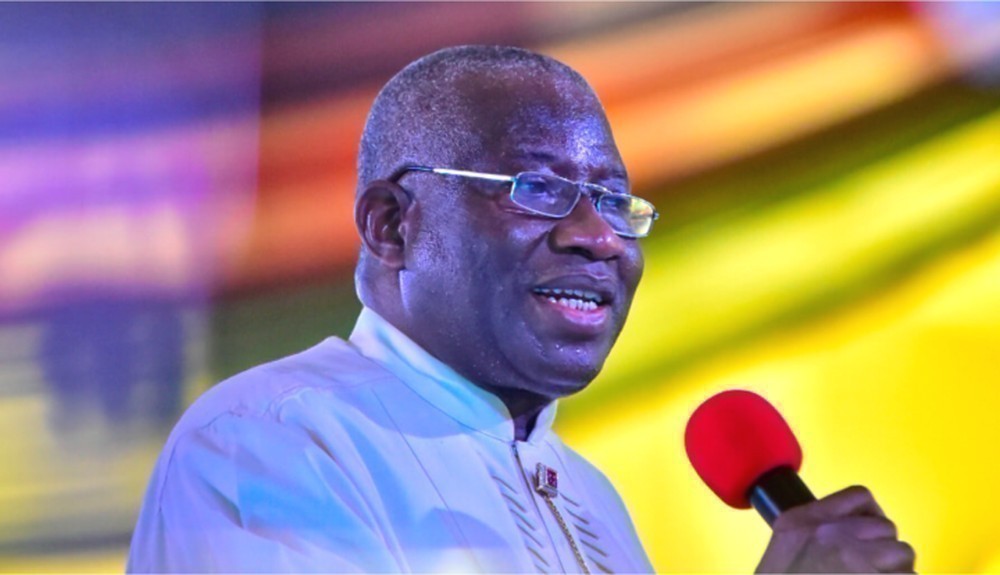
Court Summons AGF, INEC in Suit Challenging Jonathan’s 2027 Eligibility
Former President Goodluck Jonathan on Monday asked the Federal High Court in Abuja to strike out a lawsuit seeking to bar him from contesting the 2027 presidential election.
Jonathan’s counsel, Chief Chris Uche, made the application before Justice Peter Lifu after the plaintiff, lawyer Johnmary Jideobi, failed to appear in court for the hearing.
Also absent from the proceedings were the Independent National Electoral Commission and the Attorney General of the Federation and Minister of Justice, who were listed as the second and third defendants in the matter.
Uche argued that since all parties had already exchanged processes in the suit, the case should either be struck out or dismissed for lack of diligent prosecution.
He also urged the court to award a cost of N5 million against the plaintiff, noting that as a legal practitioner, Jideobi should have either appeared in court or formally communicated his inability to attend.
However, Justice Lifu declined the request to dismiss the suit.
The judge said there was no proof before the court that hearing notices had been served on INEC and the Attorney General of the Federation ahead of Monday’s proceedings.
According to him, the court would “bend backwards” one final time in the interest of justice to accommodate the absent parties.
The matter was subsequently adjourned until May 15 for definite hearing, while the court ordered that hearing notices be served on the plaintiff and the absent defendants.
Jideobi had approached the court seeking an order restraining Jonathan from presenting himself to any political party as a candidate for the 2027 presidential election.
He also asked the court to stop INEC from accepting, processing, or publishing Jonathan’s name as a presidential candidate.
In the suit, the plaintiff requested the court to determine whether, in line with Sections 1(1), (2), (3), and 137(3) of the 1999 Constitution, Jonathan remains eligible to seek the office of president.
According to the plaintiff, Jonathan already exhausted the constitutional limit after completing the tenure of late President Umaru Yar’Adua and later serving another full four-year term following his victory in the 2011 election.
An affidavit supporting the suit, filed by Emmanuel Agida, stated that Jonathan assumed office on May 6, 2010, after Yar’Adua died on May 5 of the same year.
The affidavit added that growing speculation about Jonathan’s possible participation in the 2027 presidential race informed the decision to file the case.
According to the plaintiff, allowing Jonathan to contest and possibly win the election would amount to him taking the presidential oath of office for a third time, which he argued would violate constitutional provisions.
Agida further maintained that the suit was instituted in the public interest to safeguard the supremacy of the Constitution and preserve Nigeria’s constitutional order.
Jonathan had earlier stated that he was still consulting on whether to join the 2027 presidential race.