Otti Signs Four Laws to Reform Abia Criminal Justice System, Strengthen Legal Framework
By Sir_Chima_Uduma
October 20, 2026 • 3 mins read
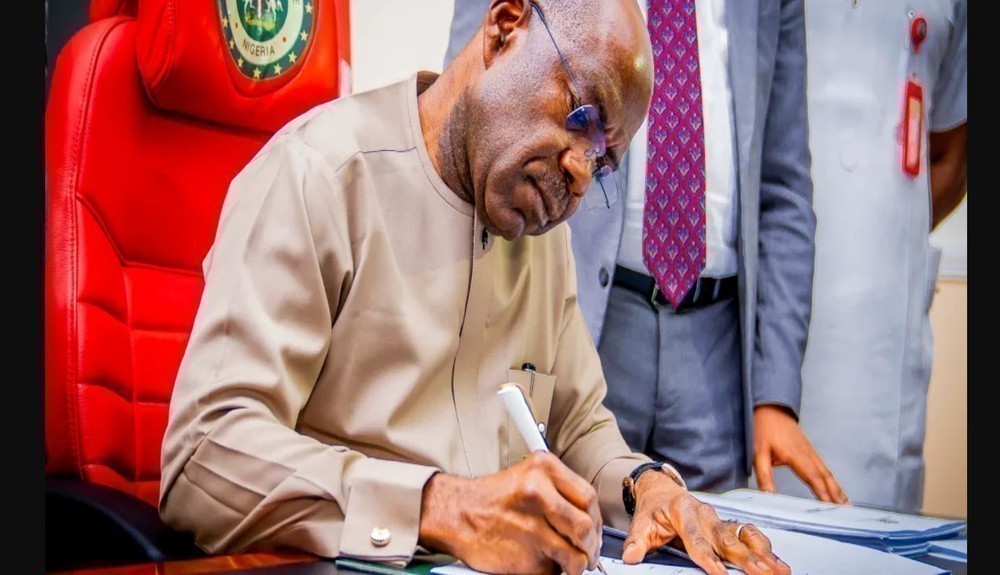
Otti Signs Four Laws to Reform Abia Criminal Justice System, Strengthen Legal Framework
Abia State Governor Alex Otti has signed four bills into law, including three aimed at reforming the state's criminal justice system and an amendment to the law governing Abia State University (ABSU).
The newly signed laws are the Abia State University Amendment Law No. 4 of 2026, Abia State Administration of Criminal Justice Law No. 6 of 2026, Abia State Criminal Law No. 7 of 2026 and Abia State Restorative Justice Law No. 8 of 2026.
Speaking at the signing ceremony at Government House, Umuahia, on Monday, Otti thanked members of the Abia State House of Assembly, the judiciary and staff of both arms of government for their contributions to the development and passage of the legislation.
The governor said he had carefully reviewed the bills and was satisfied with their provisions.
He explained that existing legal restrictions could sometimes make it difficult for the government to enforce disciplinary measures and ensure accountability.
“Sometimes we find it difficult to implement some of the things we have in mind, because when you go and check the law, you’ll find that the law does not allow you to implement strict consequence management,” Otti said.
He stressed that passing laws was only the first step, adding that effective implementation would require political will and respect for the law.
“What we can assure you here is that we have the will to ensure that the laws are respected. When there are laws and people respect the laws, everything looks like clockwork,” he said.
Otti also disclosed that his administration had begun relocating the Faculties of Law and Agriculture of Abia State University from Umuahia to the institution's main campus in Uturu. He said the move would enable the faculties to benefit from shared services and ongoing investments, while the university's teaching hospital in Aba would remain in place.
Earlier, the Speaker of the Abia State House of Assembly, Emmanuel Emeruwa, presented the four bills to the governor for assent and commended stakeholders who contributed to their passage.
New Laws Target Crime and Strengthen Victims' Protection
The Attorney General and Commissioner for Justice, Ikechukwu Uwanna, explained that the three criminal justice laws address prohibited conduct, establish procedures for handling criminal cases and provide mechanisms for repairing harm caused by crime.
Uwanna said the reforms were designed to respond to public concerns about cult-related violence, kidnapping, the destruction of public infrastructure, sexual violence and delays in criminal proceedings.
“These reforms respond to the concerns of our people, the fear of cult violence, kidnapping, destruction of public facilities, the suffering of victims of sexual violence, and the frustration of criminal proceedings that take too long,” he said.
According to the Attorney General, the Abia State Criminal Law strengthens measures against cultism by addressing membership, sponsorship and the management of unlawful societies.
The law also provides sanctions for the vandalisation of public infrastructure, including electricity transformers, boreholes and streetlights, while strengthening legal protections against rape, sexual assault, sexual harassment and other forms of violence.
Uwanna said the legislation recognises both male and female victims of rape, provides for a sex offenders register and addresses offences involving kidnapping, child exploitation, electronic records and digital assets.
Criminal Procedure and Restorative Justice
The Abia State Administration of Criminal Justice Law establishes procedures governing arrest, bail, remand, trial and sentencing.
Uwanna explained that the law prohibits the arrest of one person in place of another and prevents the use of arrest as a means of pursuing civil disputes.
The Abia State Restorative Justice Law, meanwhile, establishes a framework through which victims and offenders can voluntarily address responsibility and reparation under appropriate supervision and safeguards.
However, he noted that restorative justice would not apply to capital offences, kidnapping, terrorism, corruption and financial crimes.
“No victim should be pressured to accept an agreement. Restorative justice must operate within the law and under safeguards it prescribes,” Uwanna said.
He emphasised that participation in restorative justice must remain voluntary and that victims must be protected from coercion throughout the process.
Stakeholders to Support Implementation
The Attorney General thanked the Chief Judge of Abia State, Justice Lilian Abai; members of the House of Assembly; the law review committee; the Nigerian Bar Association; law enforcement agencies; and International IDEA and RoLAC II for their contributions to the reforms.
He disclosed that International IDEA and RoLAC II had also supported a retreat for lawmakers and pledged assistance with translating the laws into Igbo to improve public understanding.
Uwanna said the next phase would focus on implementing the new legislation, circulating and translating the laws, and training relevant stakeholders to ensure they understood and applied the provisions effectively.