The Risk of Comparing Alex Otti to Sam Mbakwe
By Uka_Chimaobi_Uduma
August 12, 2026 • 8 mins read
The Risk of Comparing Alex Otti to Sam Mbakwe
History rarely produces leaders whose names become synonymous with development. In Nigeria’s post-independence political history, only a handful of governors have achieved such recognition. Among them was Dee Sam Mbakwe, who governed the old Imo State from 1979 to 1983 and left behind a legacy that continues to influence public expectations of purposeful leadership.
More than four decades after leaving office, Mbakwe’s name remains closely associated with visionary governance. Across present-day Imo, Abia, Ebonyi and parts of Rivers State, which were carved out of the old Imo State, roads, schools, hospitals and industrial estates linked to his administration continue to feature prominently in public memory.
His legacy reinforces an important principle: governments are remembered less for political speeches and promises than for institutions and infrastructure that continue to serve people long after those in power have left office.
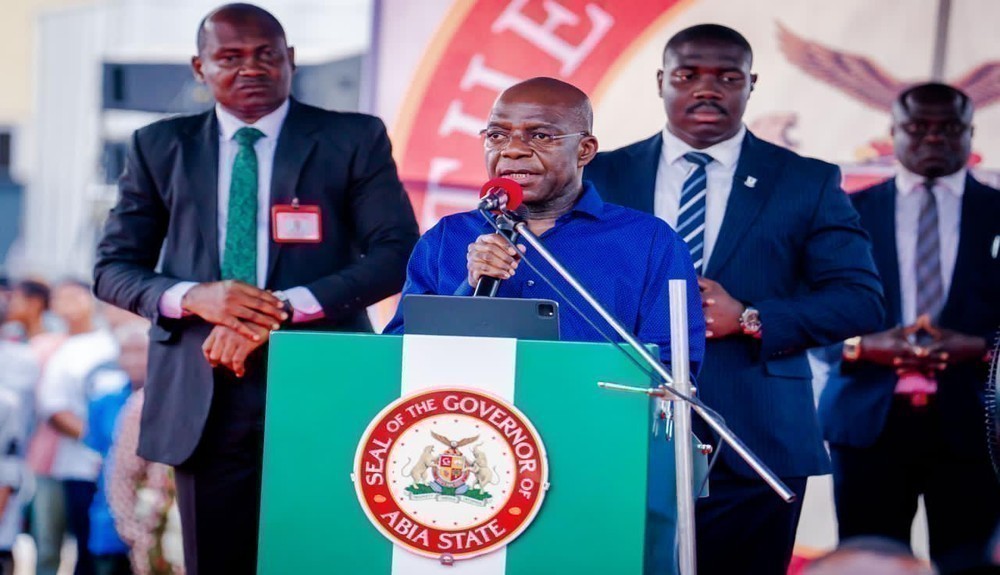
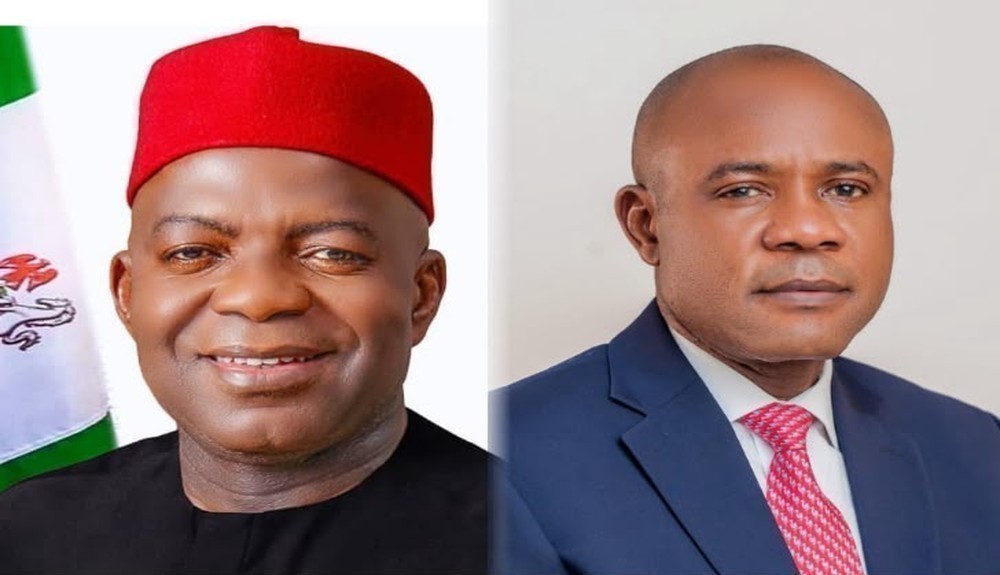
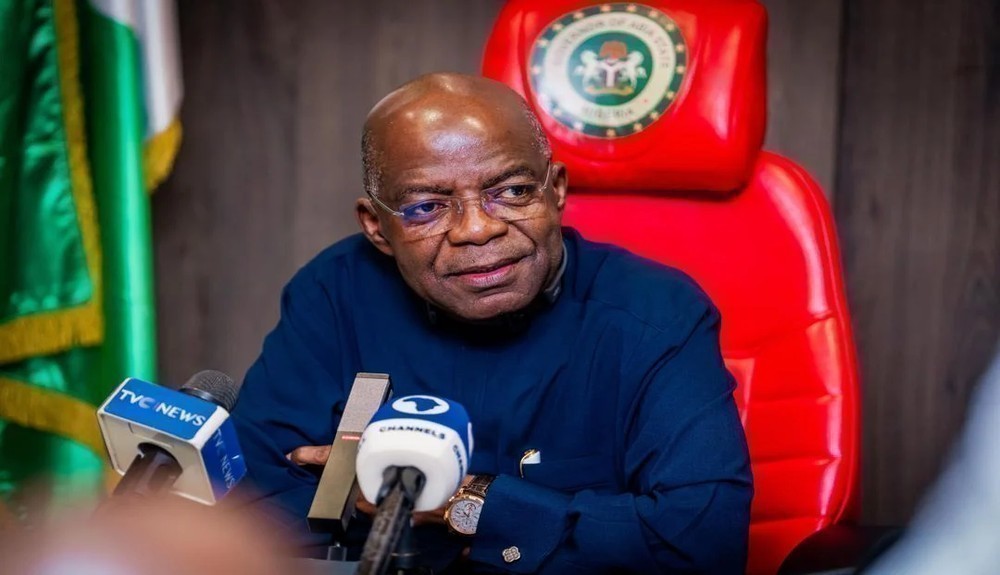
Today, a similar conversation is emerging in Abia State, where Governor Alex Otti is increasingly being compared with Mbakwe.
Such comparisons should neither be dismissed as political enthusiasm nor treated as an established historical verdict. They require careful examination through the lenses of governance, economics and institutional transformation because history ultimately rewards evidence rather than sentiment.
The central question, therefore, is whether Abia is simply witnessing another wave of public infrastructure projects or the emergence of a developmental state anchored on long-term economic transformation.
The distinction is important.
Development economists have long maintained that sustainable economic growth depends not on isolated projects but on complementary investments in infrastructure, energy, institutions, human capital and productive enterprise.
Roads without electricity rarely attract industries. Schools without corresponding economic opportunities can encourage migration. Fiscal discipline without productive investment can limit growth. Successful governments therefore need to integrate these sectors into a coherent development strategy.
Measured against this framework, the Otti administration appears to be pursuing a broader development agenda than conventional public works.
Roads as Economic Infrastructure
For decades, Abia's deteriorating road network represented one of the most visible signs of the state's infrastructure challenges.
Aba, once regarded as the commercial heartbeat of the South-East and a major cluster of small and medium-scale manufacturers, gradually lost competitiveness as transportation costs increased and businesses struggled with deteriorating infrastructure.
Infrastructure reduces transaction costs, improves productivity and can attract private investment.
Recognising this, the Otti administration has made infrastructure renewal one of its most visible priorities.
By its third anniversary, the government reported completing more than 414 road projects covering over 860 kilometres. The projects include major economic corridors such as Port Harcourt Road, Ohanku Road, Aguiyi Ironsi Boulevard and Omenuko Bridge, as well as numerous urban and rural link roads.
The significance goes beyond the roads themselves.
Every rehabilitated road has the potential to reduce transportation costs, improve access to markets, lower vehicle operating expenses and strengthen the competitiveness of manufacturers, traders and farmers.
Infrastructure, in this context, becomes an economic policy rather than simply a construction programme.
The approach also recalls Mbakwe's philosophy that public works should stimulate production and economic activity rather than merely provide political visibility.
Like Mbakwe, Otti appears to recognise that infrastructure is not an end in itself but a foundation for economic prosperity.
Can Electricity Become Otti's Defining Legacy?
If roads were a defining feature of Mbakwe's administration, reliable electricity could ultimately become one of the defining features of Otti's.
Few factors have constrained Nigeria's industrial competitiveness as severely as unreliable electricity.
Against this backdrop, the administration has leveraged the Aba Integrated Power Project developed by Professor Barth Nnaji's Geometric Power as a catalyst for broader economic transformation.
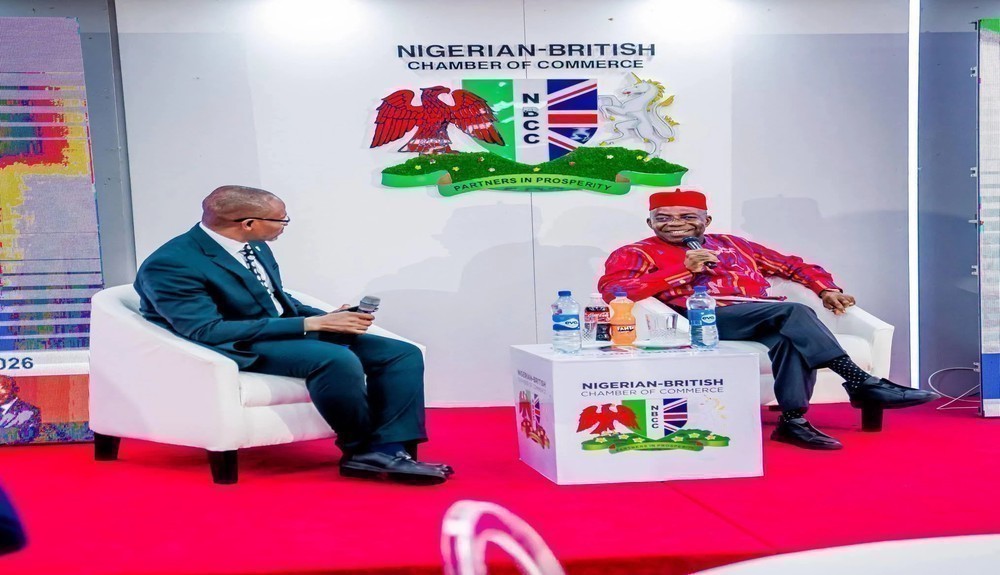
Otti has openly acknowledged the importance of more reliable electricity, particularly in creating the confidence to introduce electric buses into Abia's transportation system.
He has described Geometric Power as a landmark investment capable of supporting industrial growth, energy security and cleaner transportation.
The significance of this position lies in the recognition that electricity is not merely a utility but a fundamental driver of economic growth.
Development rarely occurs through isolated projects. It emerges when different forms of infrastructure complement one another.
Electricity powers factories. Roads move goods. Efficient transportation improves labour mobility. Water supports public health. Digital infrastructure attracts investment.
Together, these elements create an environment in which economic activity can expand sustainably.
Professor Barth Nnaji has also provided another dimension to the story. Long before entering politics, Otti reportedly played a role in securing financing for the Geometric Power Project during his banking career at First Bank and later Diamond Bank. He also helped facilitate the restructuring of the project's foreign currency obligations from dollars to naira.
This suggests that Otti's interest in productive infrastructure predates his governorship and is connected to his experience in Nigeria's financial sector.
From Consumption to Production
A persistent challenge facing many Nigerian states is dependence on monthly allocations from the Federation Account, with insufficient emphasis on expanding internally generated economic activity.
Mbakwe challenged that model through industrial estates and productive public investments.
Otti appears to be pursuing a contemporary version of the same philosophy.
The proposed $145 million solar manufacturing plant in Isiala Ngwa South, government support for Ultimum Limited's multimillion-dollar beverage manufacturing facility, efforts to operationalise the long-delayed Isiala Ngwa Inland Dry Port and continued urban renewal in Aba all point towards an economy increasingly focused on production.
Such initiatives matter because investment decisions are influenced by confidence.
Capital tends to move towards places where infrastructure is dependable, institutions are predictable and government policies are consistent.
Every new factory can create employment. Every logistics hub can reduce business costs. Every industrial investment can broaden the state's future tax base.
That is how an economy can gradually reduce its dependence on federal allocations and become more reliant on productive enterprise.
Building Human and Intellectual Infrastructure
Modern development, however, extends beyond physical infrastructure.
The Otti administration has also invested in healthcare, pursued educational reforms, upgraded public hospitals and recruited teachers and healthcare personnel.
It has also partnered with the Federal Government, the United Nations Development Programme and TETFund to establish Nigeria's first Manufacturing Technology University Innovation Pod at Michael Okpara University of Agriculture, Umudike.
The development is significant because while Mbakwe built institutions suited to an emerging industrial economy, Abia now faces the challenge of preparing for an innovation-driven economy where manufacturing increasingly depends on technology, research and advanced skills.
Development today requires not only roads and bridges but also intellectual infrastructure.
The rehabilitation of the Ubakala and Ariaria Water Schemes further reflects the administration's attention to basic infrastructure, given the importance of potable water to public health and productivity.
Similarly, the rollout of electric buses, commissioned by the Director-General of the World Trade Organisation, Dr Ngozi Okonjo-Iweala, represents an effort to align Abia's transportation system with emerging trends in sustainable urban mobility.
Taken together, these initiatives reinforce the argument that development is more effective when different sectors are integrated rather than treated as separate government programmes.
Governance as Economic Infrastructure
Perhaps the least visible but potentially most consequential aspect of the administration's agenda is governance itself.
Markets respond not only to physical infrastructure but also to credibility.
Businesses invest where contracts are respected. Banks lend where institutions function. Citizens are more willing to pay taxes where they see government services being delivered.
Against this background, efforts to strengthen fiscal discipline, reduce inherited liabilities, clear more than N40 billion in salary and pension arrears, improve transparency and restore confidence in public administration can also be viewed as economic reforms.
Governance is itself a form of infrastructure.
It reduces uncertainty, encourages investment, supports entrepreneurship and expands opportunities for economic activity.
There has also been growing external recognition of developments in Abia.
Members of the Presidency's Renewed Hope Media Team, after touring projects across the state, publicly acknowledged the scale of infrastructural renewal taking place.
The proposed $145 million solar manufacturing investment, collaboration between the Abia State Government, the Federal Government, UNDP and TETFund on innovation projects, and ongoing discussions around the Abia International Airport all point to increasing interest in the state's development trajectory.
No state government, however, possesses enough resources to finance development alone.
Partnerships with private investors, federal institutions and development organisations are therefore critical to achieving sustainable economic transformation.
Why the Mbakwe Comparison Must Be Treated Carefully
Despite the similarities, comparisons between Otti and Mbakwe must be approached with caution.
History has already delivered its verdict on Mbakwe. His reputation endured because successive generations continued to experience the value of the infrastructure and institutions associated with his administration.
Otti's story is still being written.
Several flagship projects remain under construction, and their ultimate value will depend on whether they produce lasting economic and social benefits.
The proposed Abia International Airport, planned FIFA-standard stadium in Aba, expansion of industrial clusters and the operationalisation of the Isiala Ngwa Inland Dry Port will all have to translate into measurable improvements in the state's economy before comparisons with Mbakwe can be considered fully justified.
The real indicators of success will not simply be the number of kilometres of roads completed or projects commissioned.
They will include stronger internally generated revenue, increased private investment, higher manufacturing output, lower unemployment, stronger small and medium-sized enterprises, improved educational outcomes, broader healthcare access, increased exports and rising household incomes.
These are the indicators that distinguish transformational governance from routine administration.
Nigeria has never lacked development plans. What it has often lacked is disciplined execution.
Mbakwe demonstrated that purposeful leadership could change public expectations within a single tenure.
Otti appears to be pursuing a similar path, although under a considerably different and challenging economic environment marked by high inflation, fiscal pressures, exchange-rate volatility, elevated public debt and intense public scrutiny.
Whether Otti eventually joins the ranks of Nigeria's truly transformational governors will therefore depend less on today's praise than on tomorrow's results.
If the institutions being built endure, industries expand, investors continue to choose Abia, innovation flourishes and ordinary citizens experience sustained improvements in their quality of life, history may eventually place Otti alongside Mbakwe.
For history ultimately reserves its highest recognition not for politicians who merely win elections, but for leaders whose policies fundamentally alter the economic destiny of their people.